Have Fun Staying Poor!
· 3 min read
I have been pretty aloof from the current frenzy regarding investments. As a basic principle, I try to avoid looking at the news. I wasn't even up to date on the recent phenomenon until quite recently. On top of this, when it comes to investment, I am very conservative. Knowing that almost no one can beat the market over a long period, my strategy is to be a long-term passive index investor. I have read so many books about value investing that I'm highly skeptical of any other approaches. A margin of safety, risk-adjusted returns, avoidance of extreme variations, no leverage, and going against the crowd; these are my mantras. Nothing exciting here, it's very dull.
Then I re-met the real world. A few months ago, I started receiving messages from friends and family about buying stocks and cryptocurrencies such as $AMZ, $TSLA, $LINK, and, more recently, $GME. These messages were from people with no specific investment background, and almost all of them are entirely new to the investing game. These conversations reflect a broader phenomenon. With the indefinite stay-at-home order and the raging economic crisis, many have turned to investing to make a living. There are 13 million traders on Robinhood alone, and the app is number one on the App Store. It all seems crazy to me because, looking at both the total market cap over GDP and the CAPE ratio, we are in one of the most expensive stock markets in history.
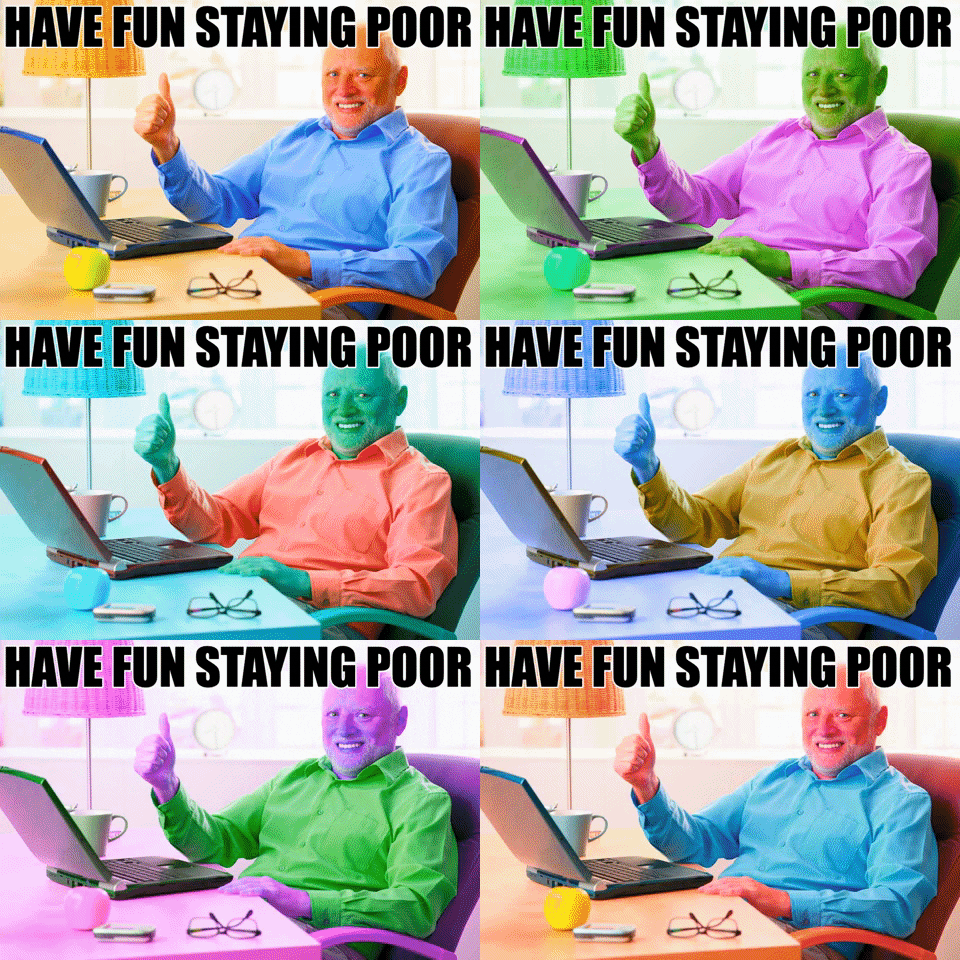
I was shocked by the messages. Worse, I felt the temptation. Today, I feel surrounded by internet memes yelling, "have fun staying poor." I understand why some of the best investors don't live close to Wall Street. Warren Buffett lives in Omaha, Seth Klarman lives in Boston, Michael Burry lives in Saratoga, Mark Spitznagel lives on a farm in Michigan. It is easier to avoid hanging out with the wrong kind of peers than to resist peer pressure. When friends send you screenshots of their gains after margin trading stocks, the temptation to capitulate and join them is strong. Great investors have mastered their psychology over time, but the younger ones don't have as much experience. One of the silver linings for me was the experience of the March 2020 crash. It was a good buying opportunity, but most people turned immediately into panic sellers. There was no more "this time is different" or "it's a unique opportunity to buy now"; there was just panic. They didn't buy the big dip, and now they are buying the all-time high. Anyway, it's interesting to feel the temptation of speculation. It reminds me of what I wrote about managing one's psychology in How to Beat the Market :
Greed is an extremely powerful force that overcomes common sense, prudence, and memory of painful past lessons. It's hard to stay prudent when every speculator around is enjoying significant profits. The combination of the pressure to conform and the desire to get rich causes investors to drop their independence and skepticism, leading to their capitulation by buying into the speculative market. The S&P 500's average return from 1991 through 1999 was 20.8% per year. Many capitulated and were crushed by the 2000 crash. Greed is a drug that affects the investor's rational thinking, while envy forces investors to comply with the herd. As Warren Buffett says, “The less prudence with which others conduct their affairs, the greater the prudence with which we should conduct our own affairs.”